Nallio HR
Sorts applications and runs the first interview round
Recruiters stop reading every application and repeating the same first phone call. The system pre-screens CVs against the role, runs a voice interview with the shortlist and hands over evaluations you can compare side by side.
Challenge
A job ad brings in dozens of replies and most of them don't fit the role. Someone still has to read each one to find out. Recruiters spend their time sorting attachments, and the first phone screens are the same conversation over and over.
When it's time to decide, the recruiter has notes from several calls that can't really be compared.
Solution
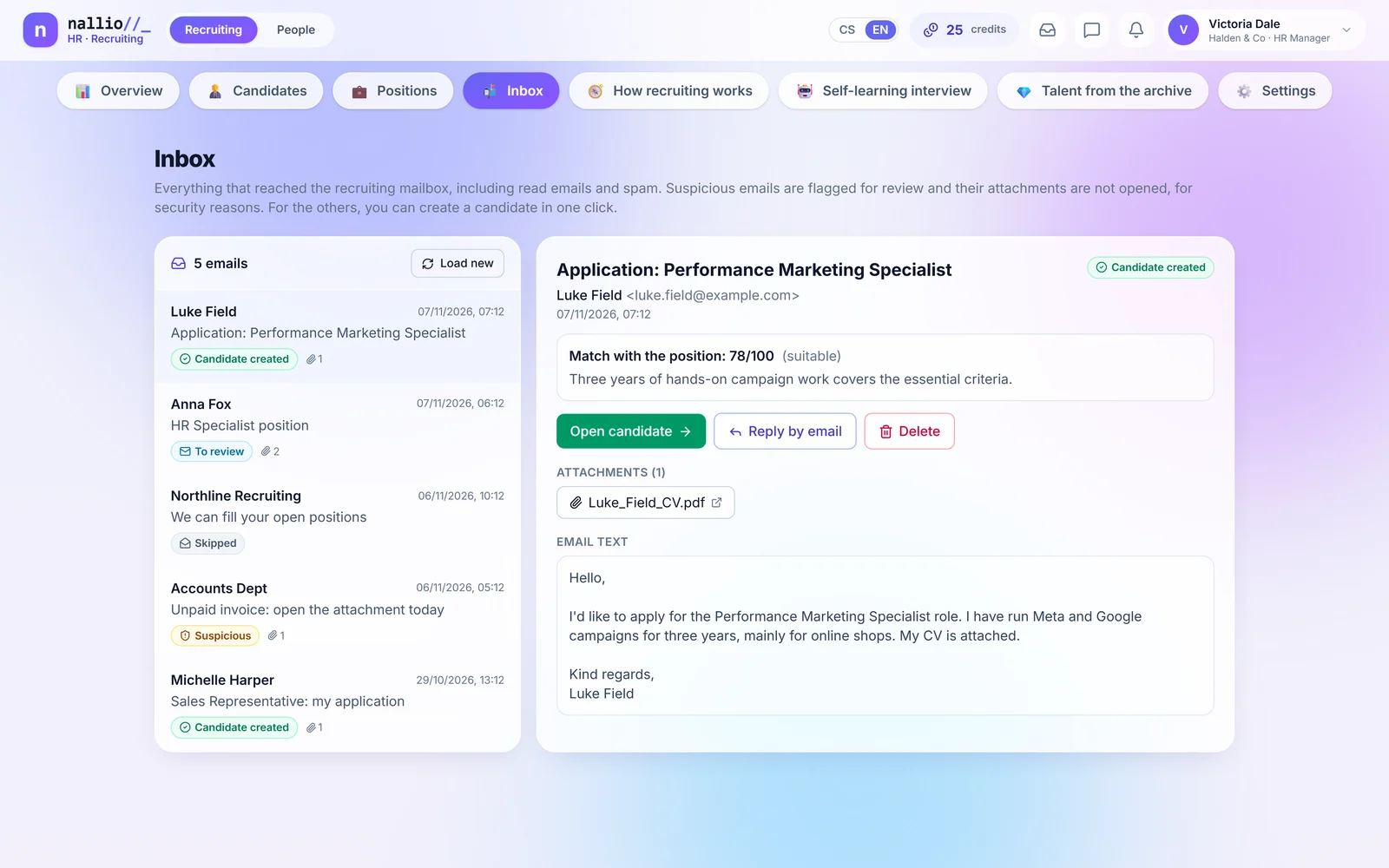
Nallio HR connects to the recruiting mailbox and processes replies: it creates the candidate, reads the CV, summarises it and scores how well it matches the requirements of that specific role.
Shortlisted candidates get a link to a voice interview. They fill in a short form, give consent, and go through the role's questions with an AI interviewer. The call is recorded and transcribed.
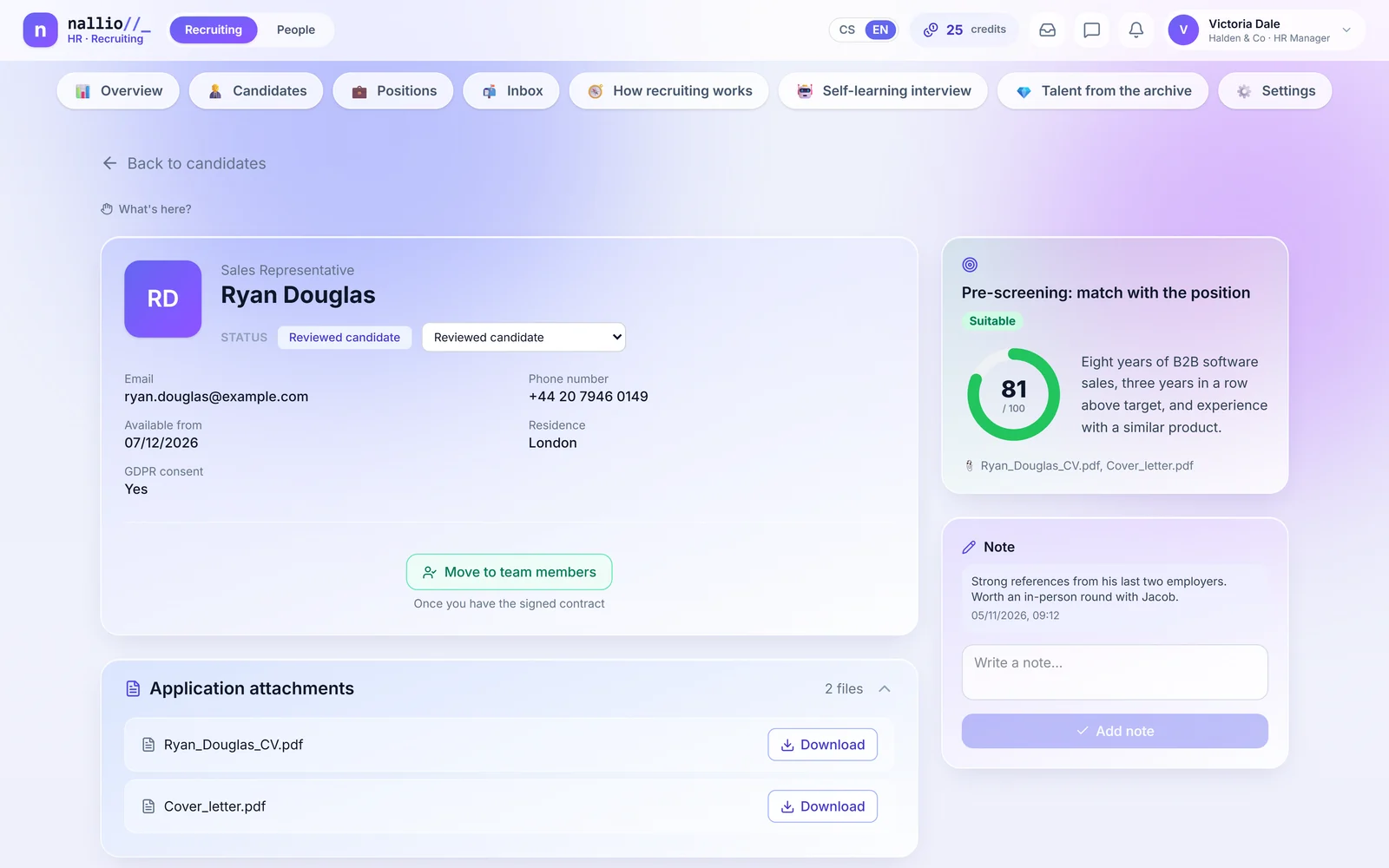
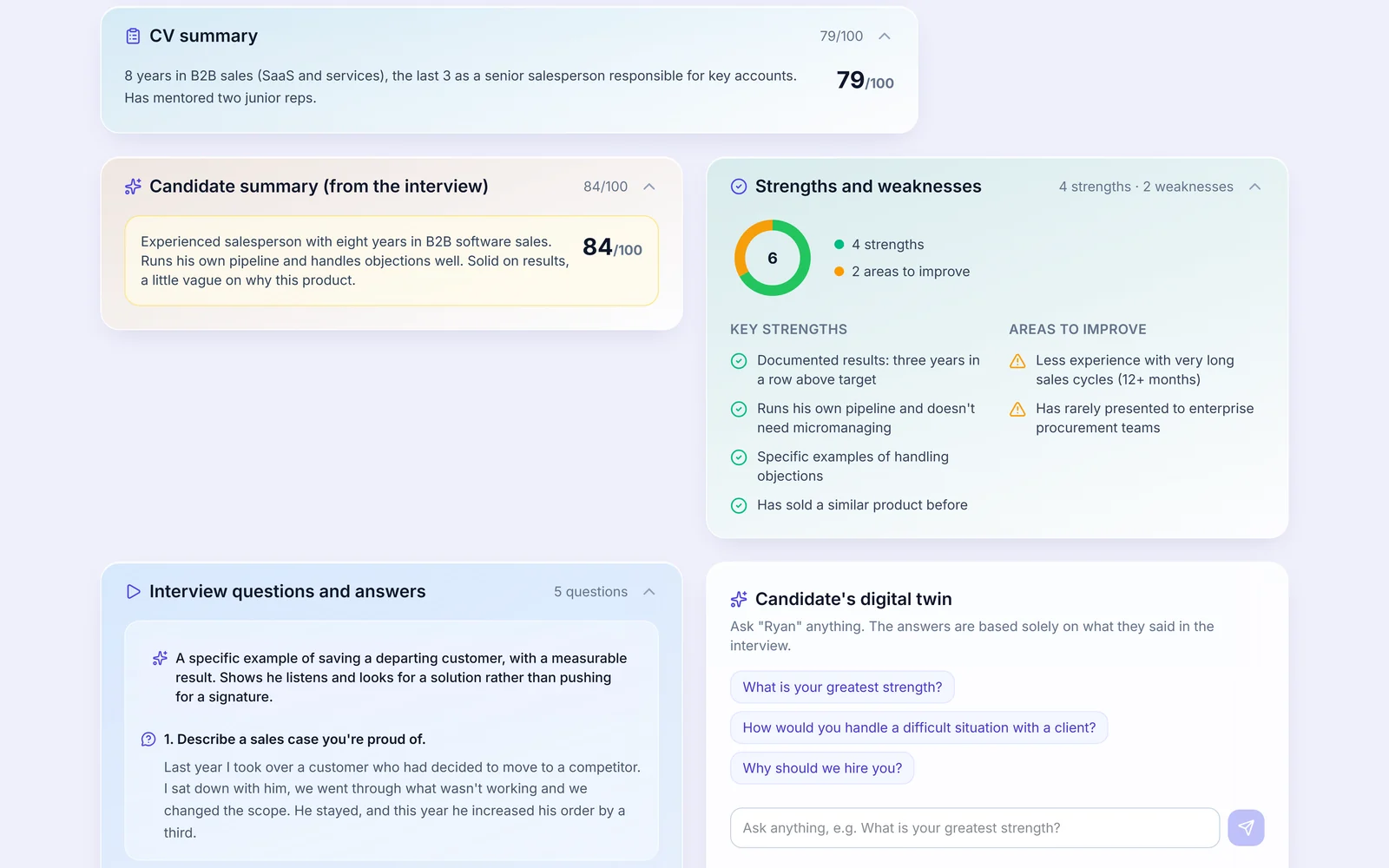
On the candidate card the recruiter sees the CV score and the interview score, strengths and weaknesses, each question with the answer and a comment, and a "digital twin" that answers follow-up questions based only on what the candidate said. A person makes the decision; the system prepares and ranks.
How it works
- 1
Role
The recruiter creates a role with a description and criteria. The system generates an interview link for it.
- 2
Applications
Replies from the mailbox are processed automatically: candidate, CV, summary and match score.
- 3
Voice interview
The candidate gets a link and does the first round with an AI interviewer whenever it suits them.
- 4
Evaluation
The candidate card shows the score and the transcript, with strengths and weaknesses listed. The recruiter moves the candidate on or rejects them.

What it does
- Processing of replies from a connected mailbox
- CV summary and match score against a specific role
- Voice AI interview via link, with recording and transcript
- Scored evaluation: strengths, areas to improve, answers with comments
- Candidate digital twin: ask questions against their interview answers
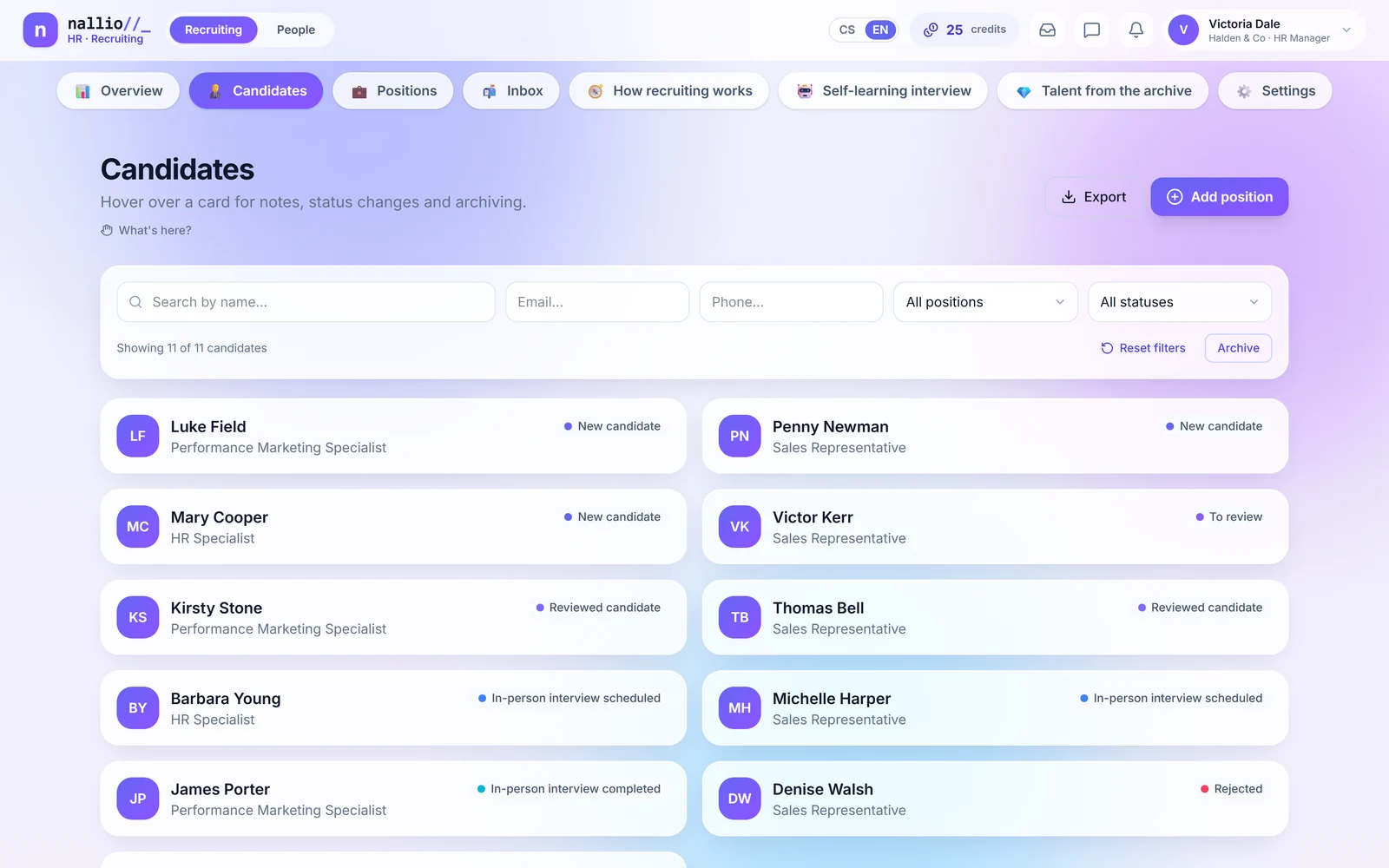
- Hiring pipeline with stages and notes, plus scheduling and an archive
- Talent from the archive: previously rejected candidates who fit a newly opened role
- Analysis of which interview questions best predict a successful hire
- Team module for hired staff: absences, training, teams, documents
- Each company's data kept separate, with a running view of AI costs
From the project
Outcome
The system is finished and waiting for its first company to hire with it for real. No live hiring has run on it yet.
It was built for a client who never put it into use. So it stayed with us, and we now offer it as our own product.
Contact